
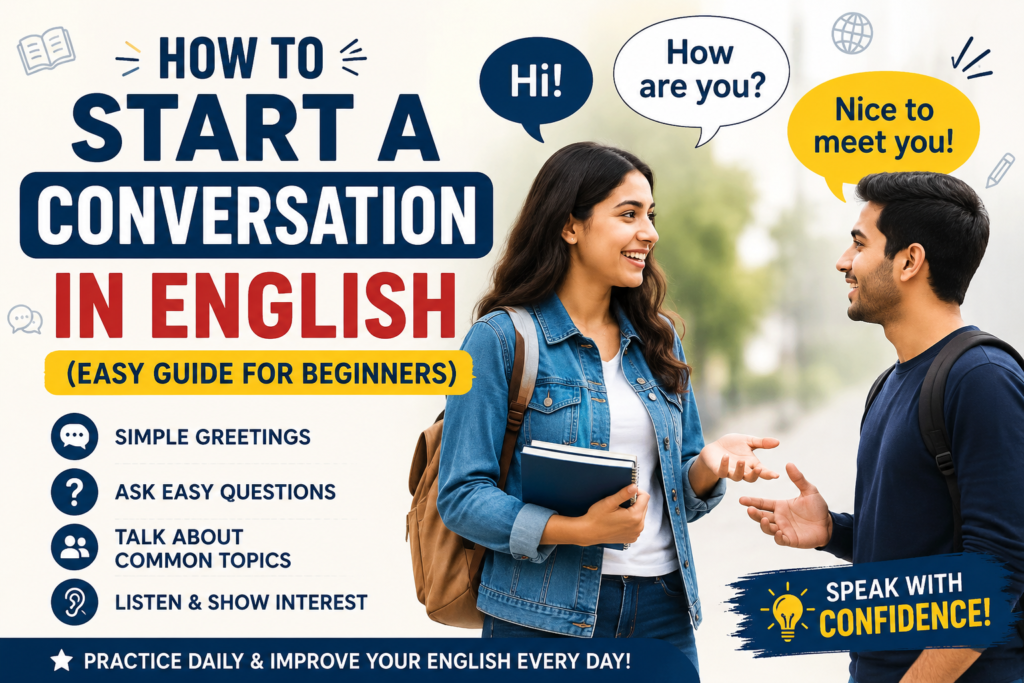
How to Start a Conversation in English (Easy Guide for Beginners) Starting a conversation in English can feel difficult, especially if you are shy or afraid of making mistakes. But don’t worry — with a few simple techniques, you can start speaking confidently.
In this guide, you’ll learn easy, practical, and real-life ways to start a conversation in English.
How to Start a Conversation in English (Easy Guide for Beginners)
Start with a Simple Greeting
The easiest way to begin any conversation is with a greeting.
Examples:
- Hello!
- Hi!
- Good morning!
- Good evening!
- 👉 If you want to sound more friendly:
- Hey! How are you?
- Hi, how’s it going?
Introduce Yourself
After greeting, introduce yourself politely.
Examples:
- My name is Amit. What’s your name?
- I’m Amit. Nice to meet you.
- Hi, I’m Amit. Where are you from?
Ask Simple Questions
Questions keep the conversation going.
Examples:
- Where are you from?
- What do you do?
- Are you a student or working?
- What are your hobbies?
- 👉 Tip: Always ask open-ended questions (not just yes/no).
Talk About Common Topics
Choose simple and safe topics.
Best topics to start:
- Weather ☀️
- Studies 📚
- Work 💼
- Movies 🎬
- Hobbies 🎯
- Examples:
- It’s really hot today, isn’t it?
- What kind of movies do you like?
- What do you do in your free time?
Use Compliments (Be Polite)
Compliments make conversations friendly.
Examples:
- I like your shirt!
- That’s a nice phone.
- You speak very well.
- 👉 Always be respectful and genuine.
Practice Daily Situations
- At School/College
- Hi, which class are you in?
- Did you understand today’s lecture?
- At Work
- Hi, how was your day?
- Are you working on this project?
- With Strangers
- Excuse me, can you help me?
- Is this seat free?
Use Simple English (Don’t Overthink)
You don’t need difficult words.
❌ Incorrect mindset: “I must speak perfect English.”
✅ Correct mindset: “I will speak simple and clear English.”
Body Language Matters
Smile 😊
Make eye contact 👀
Speak clearly
Good body language makes you look confident even if your English is basic.
Don’t Be Afraid of Mistakes
Everyone makes mistakes — even advanced speakers!
👉 Important rule: Practice > Perfection
Practice Daily (Very Important)
- Talk to friends
- Practice in front of a mirror
- Record your voice
- Speak with strangers (if possible)
- Quick Conversation Example
- Person A: Hi, how are you?
- Person B: I’m good, thank you. What about you?
- Person A: I’m doing well. By the way, what’s your name?
- Person B: My name is Rahul.
- Person A: Nice to meet you, Rahul!
- Final Tips
- Start small
- Be confident
- Practice every day
- Don’t fear judgment
Conclusion
Starting a conversation in English is not difficult if you follow simple steps. Use greetings, ask questions, and talk about daily topics. With regular practice, you will improve quickly.
“Practice English daily for better results. For extra practice, check out our eBook 30 Days to Better English.”

Is this book suitable for beginners?
Yes, this book is specially designed for beginners who want to improve their English step by step.
How much time should I practice every day?
You should practice at least 15–30 minutes daily for better improvement.
How to Start a Conversation in English (Easy Guide for Beginners)
Starting a conversation in English can feel difficult at first, but with simple sentences and regular practice, it becomes easier. You do not need perfect English to talk with someone. Just start with confidence and speak naturally.
How can I improve spoken English fast?
Practice speaking daily, learn common phrases and listen to English conversations regularly.
Is grammar necessary for spoken English?
Basic grammar helps, but confidence and practice are more important in daily communication.